The Art of Oral History
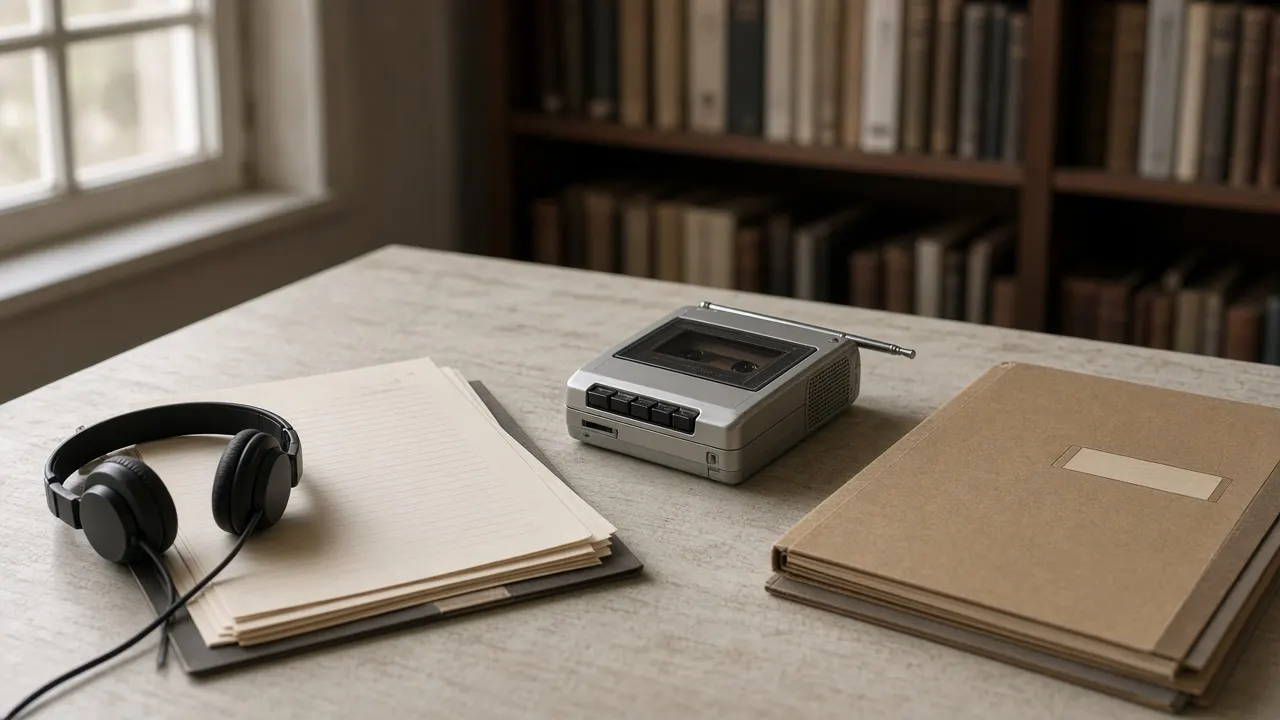
Beyond the Recorder: Establishing Ethical Protocols for Memory Collection
The most crucial phase in documenting oral history is not the recording itself, but the establishment of trust and the creation of ethical protocols. Before a single question is asked, the cultural practitioner must position themselves as a respectful facilitator, not an extractor of knowledge. This means shifting the focus from what information you are gathering to how you are gathering it and ensuring the community retains ownership of the narrative. A robust ethical framework protects the speaker and the knowledge itself, making the entire endeavor sustainable and meaningful.
To begin today, implement a mandatory "Consent Conversation" before any recording begins. This conversation must go far beyond signing a release form; it requires a verbal, detailed discussion with the participant about who will hear the material, how it will be stored, and how it might be used decades from now. Specifically, address the concept of "re-sensitization"—the idea that certain stories or knowledge may be too sensitive to be shared in public or even digitally, and the participant must have the authority to restrict access at any time. For example, if you are documenting traditional medicinal knowledge, you must establish a clear, agreed-upon protocol for how that information will be handled to prevent exploitation by pharmaceutical interests.
The Art of Deep Listening: Techniques for Eliciting Narrative Depth
Effective oral history collection requires moving past surface-level questioning and adopting the posture of a deep, non-judgmental listener. The goal is not merely to capture facts, but to capture the texture of memory—the emotions, the sensory details, and the inherent contradictions that give life to a story. Shallow questioning leads to shallow narratives; therefore, the practitioner must be prepared to follow rabbit holes of detail, allowing the speaker to guide the pace and direction of the conversation.
A powerful technique is the use of "provocative objects" or "memory anchors." Instead of asking, "Tell me about your childhood home," which might elicit a generalized description, bring a physical item related to the topic—a worn photograph, a specific type of cooking utensil, or a piece of local flora. By focusing the speaker’s attention on a tangible object, you bypass the cognitive effort of pure recall and instead trigger a cascade of associated memories. For instance, when documenting the history of a community’s fishing practices, showing an old, faded net or a specific type of tackle box can unlock nuanced details about the labor, the weather, and the social dynamics that simple questioning would miss.
Structuring the Interview: From Broad Context to Specific Detail
A well-structured interview acts like a narrative scaffold, guiding the conversation without dictating the outcome. The best practitioners employ a "funnel approach," starting with broad, general topics to warm up the speaker and build rapport, and then gradually narrowing the focus into specific, deep areas of inquiry. This structure prevents the interview from feeling like an interrogation and allows the speaker to build momentum organically.
The interview structure should generally follow this sequence:
- The Warm-Up (Context): Start with a universally accessible topic (e.g., describing a yearly festival or a familiar landscape feature) to establish rapport and ease the speaker into the act of storytelling.
- The Core Narrative (Thematic Deep Dive): Introduce the central themes of the project. Here, the practitioner uses open-ended prompts ("How did that change things for your family?") and employs active listening techniques to follow tangential threads.
Consider the case of documenting the transition of a small town from an agricultural economy to an industrial one. Starting with the general topic of "the changing seasons" allows the speaker to talk about the cyclical rhythms of farming. Then, the funnel narrows: "When did the rhythm of the seasons start to feel different?" This subtle shift allows the speaker to naturally pivot from natural cycles to economic disruption, revealing the core memory without the practitioner having to explicitly ask about industrialization.
Technical Considerations: Capturing Beyond the Spoken Word
Capturing memory is a multi-modal process that extends far beyond the audio recorder. To truly cherish the memory, you must capture the context, the emotional resonance, and the surrounding environment. This means adopting a holistic approach to documentation that incorporates multiple media types and technical safeguards.
Technically, always employ redundancy. Never rely on a single recording method. Use high-quality audio recorders, but also supplement with video cameras to capture non-verbal cues—gestures, shifts in posture, facial expressions, and the physical environment itself. The visual context often holds as much meaning as the spoken word. Furthermore, meticulous note-taking during the interview is vital. These notes should record not just the content, but the mood of the conversation: "Speaker paused, looking out the window, suggesting a deep, personal memory," or "Speaker laughed suddenly, a sound that seemed to release years of tension."
A crucial technical step is the immediate, post-interview transcription and annotation process. Do not wait until you return home. While the memory of the recording is fresh, spend time transcribing key passages and annotating them with your immediate emotional and contextual reactions. This level of detail ensures that the interpretive layer—your expert understanding of the cultural weight of the story—is preserved alongside the raw data.
Archiving and Stewardship: Ensuring Memory’s Longevity
The final, and perhaps most critical, phase is stewardship. Collecting a memory is an act of temporary guardianship; ensuring its long-term survival is an act of profound responsibility. The goal is not simply to store files, but to create a durable, accessible, and ethically governed archive that serves the community and future generations.
Before archiving, the community must be consulted on the long-term plan. This involves discussing formats, physical storage, and access rights. Will the archive be digitized and online? Will physical, climate-controlled storage be necessary? Who holds the master copy? These decisions must be made collaboratively. Furthermore, the archive should include a comprehensive "metadata layer"—a detailed description of the context, the relationship between the speaker and the knowledge, and the ethical agreements in place.
For example, if you are collecting stories related to traditional crafts, the archive should include not only the interview but also photographs of the tools, the raw materials, and the physical space where the craft was practiced. This comprehensive documentation ensures that future researchers or community members can understand the ecology of the memory, not just the narrative. Proper archiving also involves anticipating technological obsolescence, planning for migration to new formats before the current medium fails.
To see how these complex, multi-layered projects can be managed, exploring the work done by organizations like https://justlivingmemories.com/ provides excellent insight into professional memory preservation pipelines.
The act of preserving cultural memory is a continuous dialogue between the past, the present, and the future. By integrating ethical diligence, advanced listening techniques, structured inquiry, multi-modal capture, and robust archiving, practitioners can move beyond mere documentation to genuinely cherish and sustain the irreplaceable knowledge of their communities.
To begin honoring this vital work, start by formalizing your ethical consent protocols today.
A family memorial website starts at $500.
Cherish is $500, Legacy is $700, and Heritage is $900. Two revision rounds are included before launch. After launch, the family admin updates photos, stories, and names. Hosting renewal is $50 a year.