Stories Behind Family Heirlooms
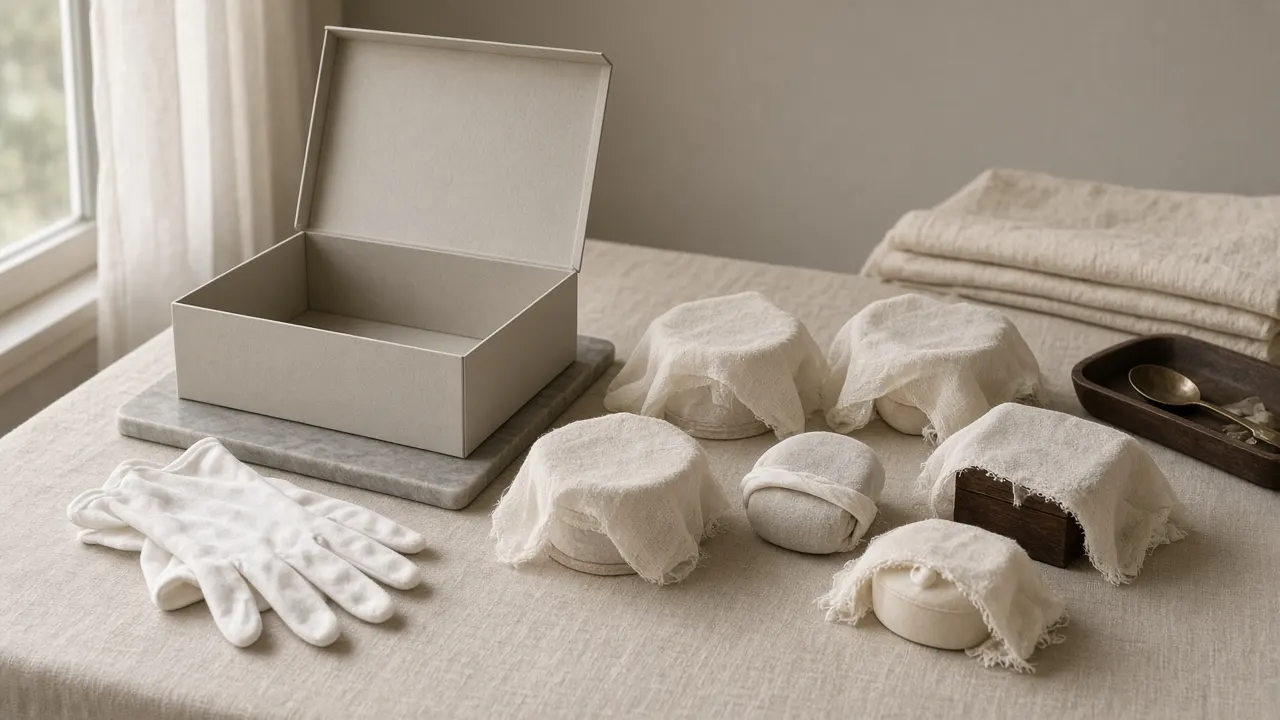
The Power of the Narrative: Shifting from Storage to Storytelling
If you are currently overwhelmed by boxes filled with physical items—yellowed letters, tarnished jewelry, or tools passed down through generations—you are not alone. This feeling of being buried in history is common among families with rich heritage. The instinct is often to simply store everything, to keep every item safe and untouched. However, true preservation goes far beyond mere storage. The most valuable aspect of any artifact is not its material composition, but the story it carries. To truly preserve a memory cherish, you must shift your focus from the object itself to the narrative it represents.
Today, the most actionable step you can take is to stop viewing your collection as a pile of things, and start seeing it as a collection of story prompts. Before you even organize a single box, take a walk through your collection and ask yourself: "What story does this object force me to remember?" For instance, instead of labeling a box "Grandma's Trinkets," try labeling it "The Story of Grandmother’s Resilience," and then pull out only the items that fit that theme—a specific brooch, a faded photograph, and a handwritten note. This immediate act of thematic grouping transforms a daunting chore into an act of focused storytelling.
Deconstructing the Artifact: Analyzing Objects by Narrative Weight
When dealing with diverse collections, it is helpful to categorize objects not by what they are, but by what they represent in the family narrative. Different artifact types demand different curatorial approaches. A handwritten letter, for example, is not just paper; it is a record of a specific emotional moment, a specific relationship, and a specific time in history. A tool, like an antique sewing machine, is not just metal; it represents hours of labor, economic necessity, and the passage of domestic life.
To analyze an object by its narrative weight, follow this three-step process:
- Identify the Core Event: What major life event is this object linked to? (e.g., a wedding, a move, a period of hardship).
- Identify the Key Player: Who was the primary person associated with this object? (This helps you anchor the story to a person, not just a time).
- Determine the Emotional Resonance: If you had to describe the feeling this object evokes, what would it be? (Joy, loss, struggle, comfort).
Consider a concrete example: you find a tarnished set of keys. A novice curator might simply note: "Keys, unidentified." A narrative curator, however, asks: Whose keys were they? What did they unlock? Perhaps they belonged to a childhood home, representing the feeling of "safety" or a specific time of "freedom." By assigning the emotional resonance, the object gains immediate, powerful meaning.
Curating the Written Word: Letters, Journals, and Ephemera
Paper artifacts—letters, diaries, ticket stubs, receipts—are perhaps the most potent carriers of personal memory. They provide direct access to the thoughts, voices, and concerns of people long gone. However, paper is fragile, and the sheer volume can be paralyzing. The goal here is not to transcribe every word, but to curate the emotional highlights.
Before you begin, assess the physical condition and the type of ink used. Items written in fountain pen ink are often more stable than those written in ballpoint pen ink, which can fade dramatically over time. Furthermore, if the letters span multiple relationships (e.g., letters from a mother, a father, and a sibling), do not keep them physically grouped. Instead, create thematic binders titled by the relationship (e.g., "Letters from Aunt Beatrice" or "Correspondence Regarding the Farm").
A practical step-by-step approach to handling large volumes of letters is as follows:
- Step 1: Triage and Sort: Group letters by recipient or sender, not by date.
- Step 2: Identify Key Exchanges: Look for back-and-forth exchanges that show a developing narrative (e.g., a complaint followed by a resolution). These exchanges are goldmines.
- Step 3: Contextualize: For every significant letter, gather accompanying materials—a photograph of the people mentioned, a newspaper clipping from the date, or a related ticket stub. This contextual layering elevates the letter from a single piece of paper to a miniature historical diorama.
Preserving the Tangible: Jewelry, Tools, and Household Items
Items like jewelry, household tools, and decorative objects are often the most physically appealing, but they can be the most conceptually challenging to curate. Their value is often assumed to be monetary, when in fact, their highest value is usually sentimental. A chipped teacup or a rusty pocketknife carries a story of daily life that far surpasses its material worth.
When dealing with these tangible items, the key is to establish a "provenance narrative"—the story of ownership and use. For example, a specific pair of gardening shears might not just be "old tools." If you can determine that they were used by a grandmother to tend a specific garden that was central to the family's identity, the tool becomes a symbol of hard work, nurturing, and connection to the land.
To maximize the narrative potential of these items, try the "Chain of Custody" exercise:
- Trace the Hand: Who physically used this object? (e.g., "This brooch was worn by Mary in 1920.")
- Trace the Location: Where was this object primarily used or kept? (e.g., "This pocketknife was always kept in the coat pocket at the general store.")
- Trace the Transition: How did it move from one person to the next? (e.g., "It was given from father to son upon graduation.")
Documenting this chain transforms a random assortment of objects into a connected, living history. When the scope of preservation and documentation becomes too large to manage personally, professional assistance in curating the entire collection, including specialized packaging and archival storage, is invaluable. You may find detailed guidance regarding how to manage the full scope of these efforts and select the right preservation methods through reviewing various options for comprehensive care and preservation.
The Art of Documentation: Building the Memory Cherish Archive
The physical act of curating is only half the battle; the other half is documenting the narrative. A memory cherish is not a box; it is a storybook. If you simply store the objects without the accompanying context, the memories are at risk of fading, even if the objects themselves remain intact. Documentation must therefore be multi-layered, combining physical care with digital storytelling.
A robust documentation system should include three types of information for every significant grouping of artifacts:
- The Object Record (The Facts): Detailed descriptions, materials, dimensions, and physical condition notes. (e.g., "Silver locket, tarnished, measures 2x1 inch, clasp is broken.")
- The Context Record (The Who/When/Where): Who owned it, when was it used, and where was it found? (e.g., "Belonged to Eleanor, used during the 1948 move to the new city.")
- The Narrative Record (The Why): The story. This is the interpretive layer. (e.g., "This locket holds the memory of the day Eleanor felt safe and settled in her new home.")
To make this process manageable, dedicate time to creating "Memory Vignettes"—small, contained stories. For example, instead of documenting 50 pieces of jewelry, select five pieces and write a short, compelling narrative that brings them together. This forces you to look for patterns and connections, which is the true heart of memory curation.
Beyond the Box: Creating a Living Memory Cherish
The ultimate goal of curating a memory cherish is not to create a museum display, but to create a living, breathing connection to the past. The archive should be a tool for conversation, reflection, and connection for future generations. This means integrating the preserved stories back into the family's current life.
Think of the archive not as a destination, but as a resource. Instead of simply showing the objects to a grandchild, use them to prompt an activity. If you find a specific type of antique tool, don't just point to it; find a modern equivalent and talk about the process of making things. If you find a letter discussing a recipe, don't just read the letter; bake the recipe and share the experience.
This active engagement ensures that the stories remain vibrant. By making the memory cherish an interactive experience, you are guaranteeing that the emotional resonance—the why—is passed down alongside the physical object. This holistic approach ensures that the past informs the present, making the preservation effort a profound gift to the future.
The first step toward curating your memory cherish is simply deciding which single object you want to tell a story about today.
A family memorial website starts at $500.
Cherish is $500, Legacy is $700, and Heritage is $900. Two revision rounds are included before launch. After launch, the family admin updates photos, stories, and names. Hosting renewal is $50 a year.